By Adaora Adibe and Nafisat Abdulrahaman
The Raw Materials Research and Development Council (RMRDC) has set the stage for a platform of knowledge sharing and intellectual engagement with the launch of its Fortnightly Lecture Series, an initiative designed to deepen discourse on Nigeria’s raw materials landscape and strengthen linkages between research, policy, and industry.

The inaugural lecture, held on August 26, 2025, featured an inaugural presentation by the Chairman of the Global Institute for Sustainable Development Advance Analysis and Design (CISDAAD), Prof. Hilary I. Iyang, who spoke on the theme: “Introduction to Nigeria’s Raw Materials Landscape: Historical Evolution and Key Players.”
In his Inaugural Speech, the Director General of RMRDC, Prof. Nnanyelugo M. Ike-Muonso underscored the significance of the lecture series as a platform to stimulate dialogue on raw materials development and utilization in Nigeria.
“designed to foster intellectual engagement and policy discourse on Nigeria’s raw materials sector”, this he said “aims to reposition the Council’s preparedness towards the proposed bill of 30 percent value addition on all raw materials before export. The implementation of the tax incentives for research institutions and local industries utilizing raw materials as well as Nigeria’s first policy with raw materials among others”. He said.
You Might AlsoLike


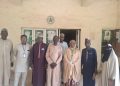

He emphasized that the initiative reflects the Council’s commitment to fostering innovation, guiding policy, and strengthening partnerships across academia, industry, and government over a span of twelve months.
According to the DG, the first quarter of the lecture series will cover the nature of Nigeria’s raw materials sector and emerging economy, understanding it’s history, its players and Value chain while learning from Countries like Brazil and India. The second quarter will cover applications of raw materials for supply chain efficiency, tools technologies and models that can optimize the country’s inventory systems, industrial clusters and vertical integration strategies.
Prof Ike-Muonso went further to reveal that the third quarter will focus on issues and challenges in raw materials management, confront the hard truths, logistical bottlenecks, policy gaps, rural accessibility, climate change and explore solutions, public private partnerships, institutional congregation and sustainable frameworks. While the fourth quarter will be on prospects and road ahead, investment opportunities, capacity building and the role of universities and technical hubs. Chart a roadmap to 2030 and beyond.

“ it will reflect our collective ambition to unlock the full potential of Nigeria’s abundant natural resources and build a resilient economy driven and globally competitive supply chain eco system through intellectual engagement, locally and globally “. This the DG said is “in tandem with Mr. President’s renewed hope mantra and the sectoral leadership of The Honorable Minister of Innovation, Science and Technology, Chief Uche Godfrey Nnaji.
Context and Mandate of RMRDC
Established in 1987 through Decree 39, now an Act of Parliament, the Raw Materials Research and Development Council (RMRDC) serves as the Federal Government’s principal agency for promoting, supporting, and expediting the development and utilization of Nigeria’s industrial raw materials. Over the years, the Council has pursued its mandate by reducing dependence on imported raw materials, encouraging industrial investment, and facilitating the commercialization of research outcomes. Through these initiatives, RMRDC has positioned itself as a critical driver of economic diversification, innovation, and sustainable industrial growth. The Fortnightly Lecture Series is a further testament to this role, providing a structured avenue for continuous intellectual exchange and capacity building.
Prof. Iyang’s Lecture: Tracing Nigeria’s Raw Materials Journey:
Delivering the inaugural lecture, Prof. Iyang took participants on a journey through the historical evolution of Nigeria’s raw materials sector, highlighting both the opportunities and challenges that have shaped its trajectory. He delivered the lectures in the following ten sections:
- Materials categorization and utility
- Early history of raw materials exploration and exploitation in Nigeria.
- Raw materials and their role in Nigeria’s economy.
- Spatial distribution of raw materials in Nigeria.
- Approaching entrepreneurship and industrialization with Nigeria’s raw materials.
- Use of secondary materials e.g. wastes and by- products as supplements to Nigeria’s primary raw materials.
- Research development as a necessary component of Nigeria’s raw materials exploitation and use.
- Personnel training and capacity building requirements for support of Nigeria’s raw materials conversion.
- Key players/stakeholders in the Nigeria’s raw materials industry
- Conclusion and recommendations on the advancement of Nigerian raw materials industry.
Prof. Iyang noted the contributions of key players from government agencies and private sector investors to research institutions and local communities emphasizing the need for stronger synergy to unlock the sector’s full potential.
“The wealth, stealth and health of any country are all dependent on the capacity of that country to galvanize real and then introduce knowledge to governance, processes and entrepreneurship processes for the production of goods and services. The extent to which any country can do this is the determinant of that countries progress and advancement”.
He further commended the DG for the initiative while emphasizing the importance of the lecture series in diffusing knowledge into society not only for entrepreneurship but for governance as well. “this agency (RMRDC) is one of the three most important agencies in respect to resource mobilization in Nigeria to attain its national goals.
Present at the Inaugural lecture were the Directors of RMRDC as well as other management Staff with many others connected online vi YouTube live a sparking conversation on how best to strengthen Nigeria’s raw materials base in line with global trends. Participants expressed optimism that the series would become a vital knowledge hub, helping to shape policy and foster innovation.
The DG reiterated the Council’s commitment to sustaining the lecture series, stressing that it would not only enrich Nigeria’s intellectual landscape but also serve as a practical tool for policy development, industrial growth, and economic resilience.
“the publication that will anchor this series titled Transforming Nigeria’s Raw Materials Sector: A Comprehensive Guide to Supply Chain Efficiency, is not only a book, it is a blueprint, a living document and a call to action “said the DG.
With this inaugural session, RMRDC has signaled its determination to ensure that Nigeria’s raw materials sector continues to evolve in a way that supports industrialization, reduces import dependency, and drives sustainable national development.