

By Mustapha Shettima, Alfaya Jibrilla & Hajara Bomai
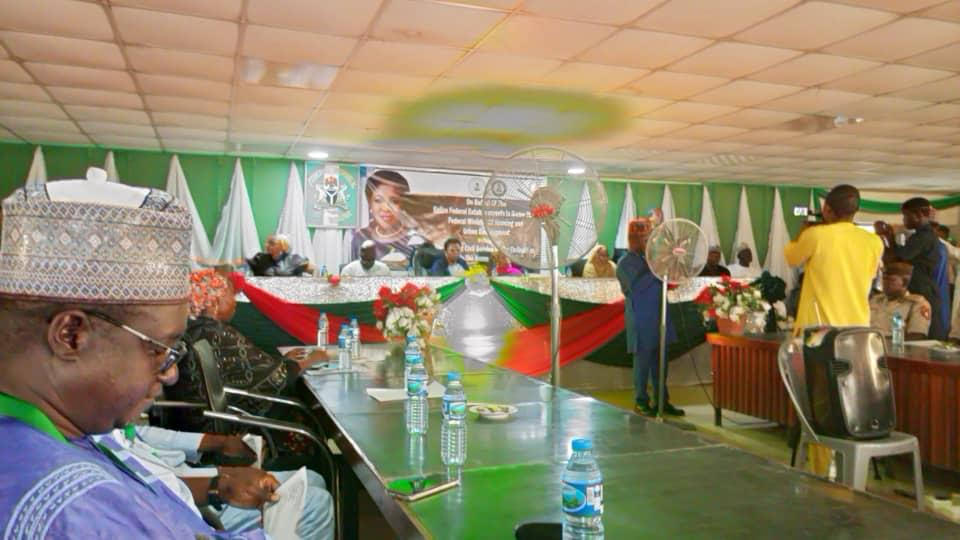
As part of her nationwide engagement tour under President Bola Ahmed Tinubu’s Renewed Hope Agenda, the Head of the Civil Service of the Federation (HCSF), Mrs. Didi Esther Walson-Jack, paid an official visit to Borno State, reaffirming the government’s commitment to public sector reform, improved worker welfare, and digital transformation.

The visit provided a platform for open dialogue with civil servants, addressing pressing issues such as rising inflation, low productivity, and systemic inefficiencies. Mrs. Walson-Jack emphasized the need to digitize public service operations, urging all federal staff to adopt modern tools that foster transparency, speed, and collaboration.
Among the federal establishments actively engaged during the visit was the Raw Materials Research and Development Council (RMRDC), Borno State Coordinating Office. In attendance were Mustapha Shettima, Alfaya Jibrilla, Hajara Suleiman Bomai, and Abdullahi Usman Kachalla, who participated in the digital literacy session. Their involvement underscored the Council’s sustained commitment to reform, innovation, and service excellence.
Speaking to the assembled civil servants, Mrs. Walson-Jack stated:
You Might AlsoLike



“My visit is not just ceremonial. It is about direct engagement, listening to your challenges and ensuring that reform is not only a policy on paper but a reality in practice.”
She unveiled several newly introduced digital platforms aimed at streamlining workflows and eliminating bureaucratic bottlenecks. These innovations, she explained, will support faster research processing, smarter service delivery, and better inter-agency collaboration.
Highlighting the Federal Civil Service Strategy and Implementation Plan (FCSSIP 2021–2025), Mrs. Walson-Jack noted its six key reform pillars:

- Capability Building & Talent Management
- Performance Management System
- Digital Transformation via ICT
- Enhanced Staff Welfare
- Service Innovation
- Civil Service Culture and Values
Civil servants were encouraged to familiarize themselves with these pillars via the official website: www.ohcsf.gov.ng. Other key reform tools include digital newsletters, online academic platforms, circulars, and an AI-based platform known as ServiceWise GBT, which is revolutionizing public service learning and engagement.
The HCSF also organized a digital literacy assessment for federal staff, including those from RMRDC. Officers Hajara Sulaiman Bomai and Abdullahi Usman Kachalla successfully answered two out of three test questions, earning cash rewards—a gesture signaling government’s commitment to incentivizing digital competence.
RMRDC Borno State Coordinator, Mustapha Shettima, lauded the visit as both timely and strategic, noting that under the leadership of Director General Prof. Nnanyelugo Martin Ike-Muonso, the Council had already made significant strides in transitioning from paper-based operations to digital systems.
“For an agency like RMRDC, which thrives on scientific research, data, and innovation, digital transformation is not optional, it’s essential,” Shettima said.
Mrs. Walson-Jack further addressed the economic hardships facing civil servants, acknowledging inflation and its impact on daily life. She assured that the federal government is actively reviewing salary structures to align remuneration with current living conditions, reinforcing the commitment to worker welfare.
She concluded with a rallying call to civil servants:
“Transformation is not a buzzword—it’s our obligation. This plan is not just a document; it is a declaration that we will modernize and humanize the service. The civil service must evolve from being a mere administrative structure to the engine room of national rebirth.”
RMRDC, as a vital stakeholder in Nigeria’s industrial and research development, views the engagement not merely as a routine visit but as a clarion call—a renewed opportunity to deepen its impact through digital integration, strategic collaboration, and enhanced staff capacity.
As Nigeria faces socio-economic and institutional challenges, such engagements underscore the urgent need for a digitally empowered and innovation-driven public service. RMRDC’s active participation in this transformation marks a strong commitment to shaping a smarter, more inclusive, and development-focused Nigeria.