By Musa Waziri
In a significant move to strengthen Nigeria’s agricultural value chains, a high-level strategic partnership meeting was held at the Conference Hall of the Senate Building, Taraba State University (TSU), Jalingo, bringing together key stakeholders in the tree crops sector.

The meeting, which included representatives from the Tree Crops Research Institute of TSU, the Raw Materials Research and Development Council (RMRDC), and the National Coffee and Tea Association of Nigeria (NACOFTAN), aimed to explore avenues for collaboration to unlock Taraba State’s rich agro-climatic potential for coffee and tea development.
Also, in attendance were members of TSU’s newly reconstituted Governing Council, the Taraba State Coordinator of RMRDC, Mr. Musa Waziri, officials from the Nigerian Export Promotion Council (NEPC), the Ministry of Commerce, the Taraba Chamber of Commerce, Industry, Mines and Agriculture (TACCIMA), and other stakeholders.

Declaring the meeting open, the Vice Chancellor of TSU, Prof. Sunday Paul Bako, welcomed all participants and commended both NACOFTAN and RMRDC for the timely and strategic initiative. He reiterated TSU’s commitment to driving agricultural research and innovation and noted the university’s existing partnerships with other research institutions, including the Cocoa Research Institute of Nigeria (CRIN), in efforts to enhance tree crop development.
You Might AlsoLike


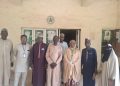

Speaking on behalf of NACOFTAN’s National President, the North-East Coordinator, Hon. Engr. Peter Yuguda, lauded TSU’s receptiveness to partnership and emphasized the association’s commitment to working with academic and government institutions to develop the coffee and tea industries. He also presented NACOFTAN’s mission, vision, and strategic goals, highlighting a strong focus on building sustainable value chains and empowering rural communities.
During the session, stakeholders presented an overview of the global coffee and tea value chains, pointing to the growing demand, export potential, and specific opportunities available in Taraba State. Several collaborative initiatives were discussed, including the establishment of plant nurseries, out-grower schemes, farmer training hubs, and value addition centers.
Roles and responsibilities were clearly defined: TSU will lead in research and extension services, RMRDC will focus on raw material coordination and utilization, while NACOFTAN will mobilize farmers and ensure access to markets.

A preliminary action plan was proposed, including the formation of a task team to draft a Memorandum of Understanding (MoU) and develop an implementation framework.
The meeting concluded with all parties expressing satisfaction and a shared commitment to follow through with concrete actions. Prof. Bako again expressed gratitude to NACOFTAN and RMRDC, urging that the partnership produce measurable outcomes that will boost the agricultural economy of Taraba State and contribute to national development.