By Suleiman R
The Kwara State Coordinating Office of the Raw Materials Research and Development Council (RMRDC) has continued its drive to promote local resource utilization with an industrial visit to Shelter Setters Aluminium Company, located in Ilorin, on Wednesday, 25th June 2025.

The visit, led by Mrs. Lydia Adewumi L.O., State Coordinator, was part of the Council’s stakeholder engagement efforts aimed at understanding industry challenges and identifying opportunities for raw materials development and collaboration.
Shelter Setters Aluminium Company, which specializes in the production of iron and aluminium-based roofing sheets, relies heavily on secondary raw materials processed by large-scale industries such as Kam-Wire Company, which imports cold iron and melts it into usable sheets. These sheets, in turn, are used by Shelter Setters to fabricate roofing products. In some cases, melted iron scraps also serve as alternatives.
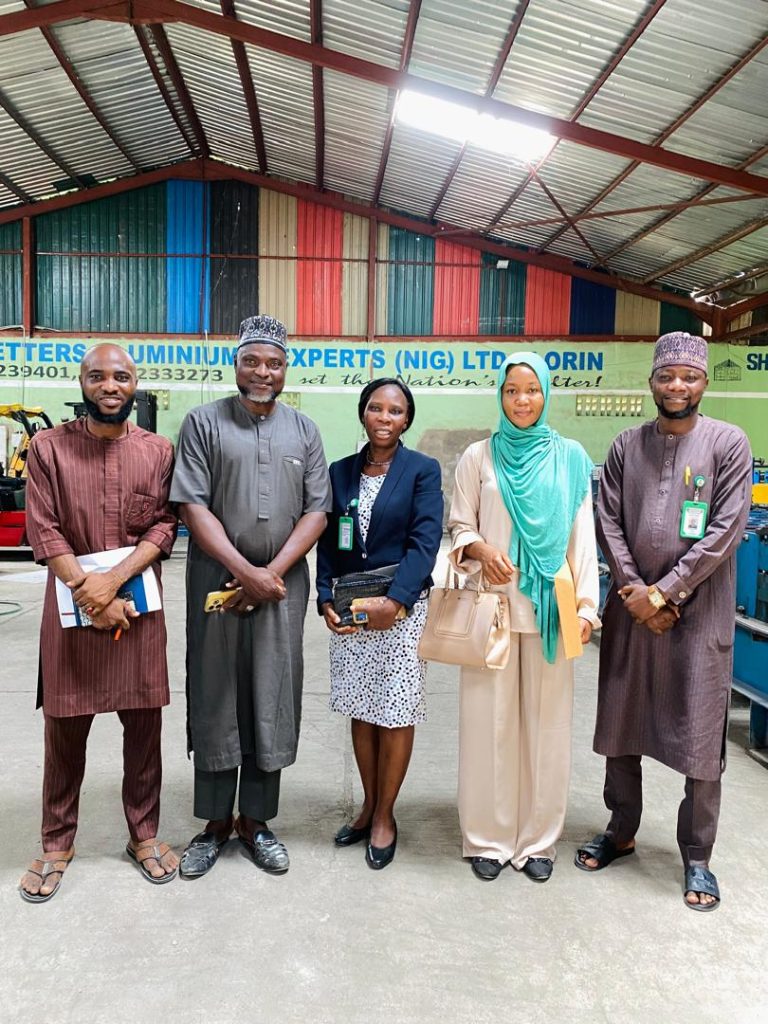
During the visit, the Managing Director of Shelter Setters, Dr. Hasan Ibrahim, highlighted several challenges confronting small-scale manufacturers in Nigeria. Among them is the over-reliance on imported primary raw materials, most of which are processed abroad before being finished locally. He also lamented that large manufacturing firms, despite their capacity to process raw materials, often consume these inputs internally, thereby limiting access for smaller firms and disrupting the value chain.
You Might AlsoLike




In response, Mrs. Adewumi presented the Council’s position, reiterating RMRDC’s support for policies that strengthen local manufacturing. She highlighted the proposed 30% value addition policy, which has passed its second reading at the Senate. The policy mandates that raw materials must undergo at least 30% local value addition before they are either used or exported — a move aimed at improving industrial capacity and reducing dependency on imports.
Dr. Hasan welcomed the initiative, noting that it could significantly boost small manufacturers if implemented effectively. He also emphasized the importance of specialization, citing China as an example where strict adherence to industry-specific focus has driven rapid industrial growth.
Dr. Hasan reiterated the absence of primary raw materials producers in Nigeria, a gap that has allowed foreign-made products, particularly from China, to dominate the market. He called for urgent collaboration between public institutions and private sector players to reverse the trend and foster sustainable growth in local manufacturing.

The visit underscores RMRDC’s ongoing commitment to stakeholder engagement, local content development, and the promotion of policies that enhance Nigeria’s industrial ecosystem.