By Igwebuike Temidayo and Olufadi Halima
The Raw Materials Research and Development Council (RMRDC) has called for urgent and deliberate measures to accelerate women’s access to raw materials value chains, stressing that broader inclusion is critical to sustainable industrial development in Nigeria.

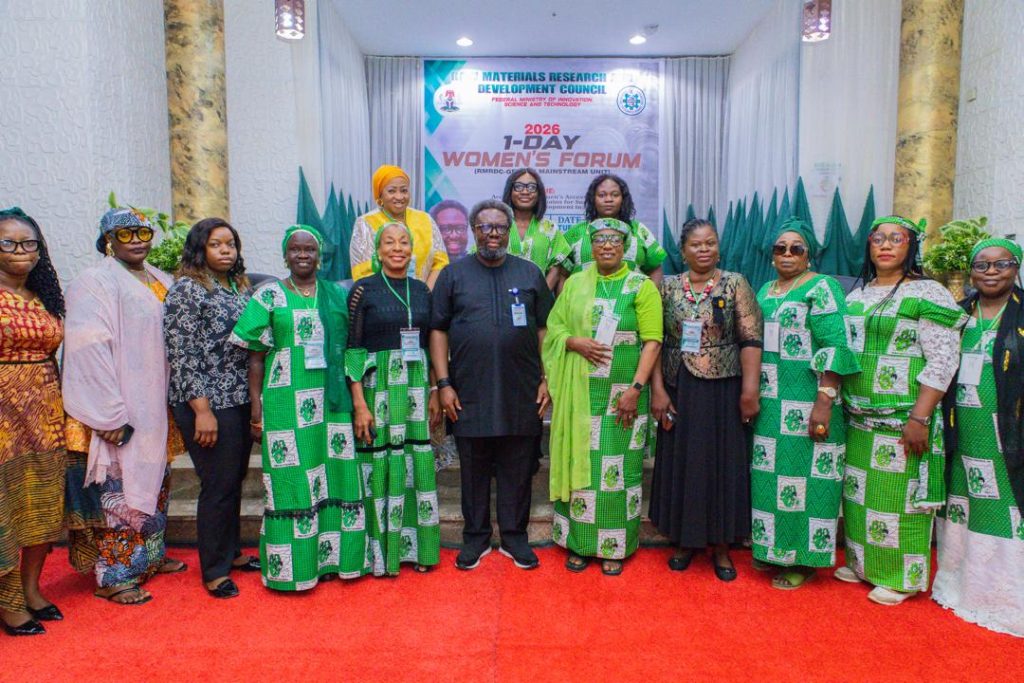
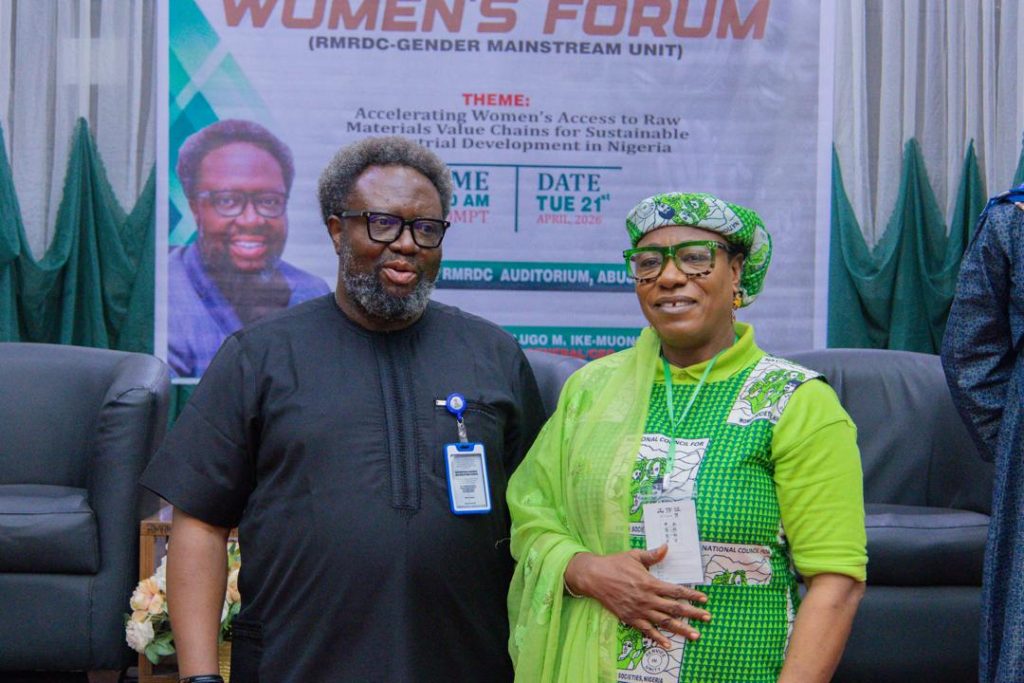
The call was made during an event organized by the Council’s Gender Mainstreaming Unit, themed “Accelerating Women’s Access to Raw Materials Value Chains for Sustainable Industrial Development in Nigeria.” The event focused on the structural barriers that continue to confine many women to the lower end of production systems, despite their significant contributions across agriculture, solid minerals, agro-processing, and trade.
In his welcome address, the Director-General and Chief Executive Officer of RMRDC, Prof. Nnanyelugo Ike-Muonso, described the forum’s theme as both strategic and timely, noting that it directly confronts long-standing constraints on women’s participation in Nigeria’s industrial and economic growth. He observed that although women play indispensable roles across several sectors, many remain confined to low-productivity segments of the value chain where returns are limited.
He said the challenge now is to move beyond acknowledgement of women’s contributions and address the systems that restrict their advancement. According to him, this requires innovative financing models, stronger partnerships with financial institutions, more effective cooperative systems and deeper collaboration with development agencies to unlock opportunities for women entrepreneurs.
You Might AlsoLike




Prof. Ike-Muonso further linked the conversation to Nigeria’s wider development agenda, saying stronger participation by women in value-added industries would support economic diversification, job creation, poverty reduction and industrial competitiveness. He stressed that investment in women is ultimately an investment in families, communities and national prosperity.
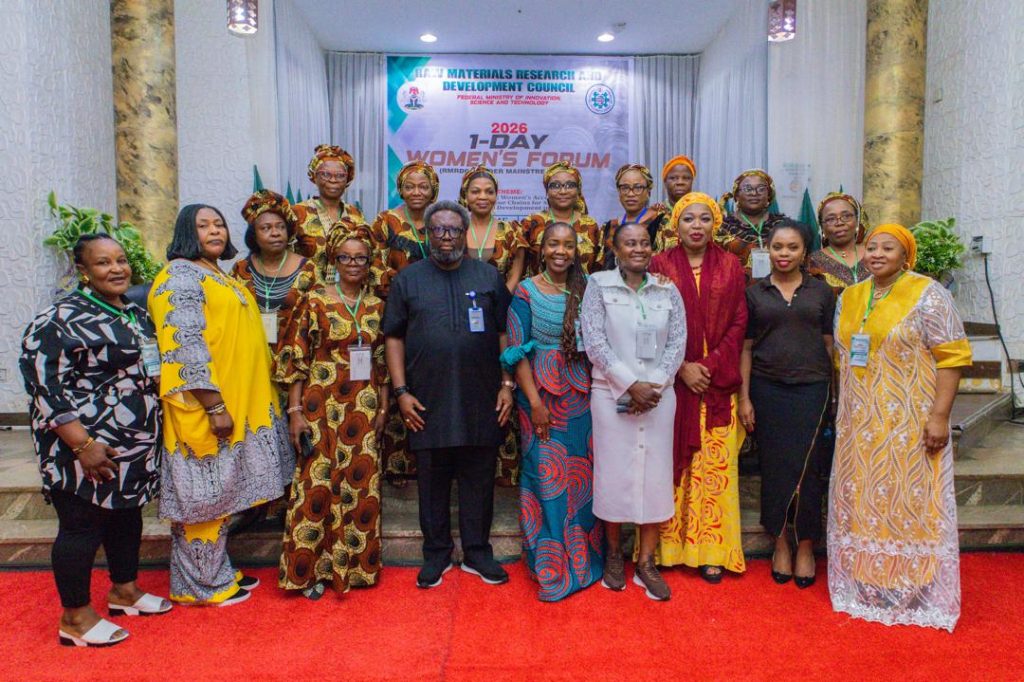
He also commended the Council’s Gender Mainstream Unit for initiating the forum and reaffirmed RMRDC’s commitment to value addition, local resource utilisation and women’s empowerment as central pillars of industrial growth. The Council, he said, would continue to provide technical support, facilitate linkages and advocate policies that create a more enabling environment for women-led enterprises.
That message was reinforced in the keynote address delivered on behalf of the President of the Organisation of Women in International Trade (OWIT) Nigeria, Dr. Mrs. Blessing Irabor-Oza, by Mrs. Queen Ouserigha, Abuja Coordinator of OWIT Nigeria. The keynote argued that genuine inclusion in value chains must go beyond nominal participation and extend to real access to the systems that determine productivity, profitability and influence.

According to the address, true access for women means access to processing infrastructure, technology and innovation, finance for scale, markets and buyers, as well as decision-making and ownership. Without these, the speaker said, the country would merely be managing the problem rather than solving it.
The keynote therefore called for a shift from participation to positioning and ultimately to ownership, maintaining that value addition is no longer optional if Nigeria is to build a stronger industrial base. OWIT Nigeria said women entrepreneurs across the country could drive value addition at scale if given the right technology, infrastructure and institutional support, with corresponding gains in business growth, job creation, industrial strength and national economic performance.
The forum also featured a paper presentation by the Director of Misedi Empowerment Initiative for Africa, Mrs. Bose Etiokpa, who examined the nature of relationships within value chain systems. She explained that actors in a value chain generally relate through competition and cooperation, both of which can have positive or negative implications depending on how they are managed.
She noted that in vertical relationships, where different firms perform different functions, cooperation is usually necessary because the players depend on one another. By contrast, in horizontal relationships, where firms perform the same function, healthy competition is expected to stimulate upgrading and improvement.
Beyond the paper presentation, participants engaged in two panel sessions that extended the day’s central argument from theory to practice. The first panel, which focused on enabling women in raw materials value chains through technology and market linkages, emphasised the need for stronger institutional and commercial connections, including cluster arrangements that would ease access to manufacturers, processors and other key actors in the production ecosystem.
The second panel turned attention to successful models and practical experiences that are strengthening women in the raw materials sector. Speakers highlighted examples of support systems and collaborative approaches that can help women-owned enterprises gain a firmer foothold in the sector and scale their operations more effectively.
In her closing remarks and vote of thanks, the Deputy Director and Head of the Gender Mainstream Unit, Dr. Mrs. G.U. Abidoye, emphasized the significance of leadership support in advancing women’s inclusion. Referring to the Director-General’s encouragement of women, she said, “Give a woman a push and you’ll see wonders.”
She described the RMRDC leadership as gender-sensitive and pointed to the Council’s internal representation as evidence of progress, noting that seven of its 15 directors are women. Thanking participants for their attendance, she urged them to remain supportive of future initiatives of the Unit.