

By Oluwaseyi Otitoju
The Institute of Professional Industrialists & Management Development (IPIMD) has called for a strengthened strategic partnership with the Raw Materials Research and Development Council (RMRDC) to drive Nigeria’s industrial growth and enhance the capacity of entrepreneurs and manufacturers across the country.

The appeal was made during a courtesy visit to the Director-General/Chief Executive Officer of RMRDC, Prof. Nnanyelugo Ike-Muonso, where the IPIMD delegation, led Dr. Pascal Ogechi who represented the Chairman of the Industrial Policy Council, Felix Achibiri, presented a outlined areas of collaboration and mutual interest.
Achibiri described the visit as more than a routine engagement, noting that it represents a “strategic realignment” between both institutions at a time when Nigeria is pursuing industrial revitalization under the Renewed Hope Agenda.
He emphasized that the mandates of IPIMD and RMRDC are closely aligned, particularly in advancing industrial capacity building, policy development, and public-private partnerships aimed at strengthening Nigeria’s raw materials sector.
You Might AlsoLike




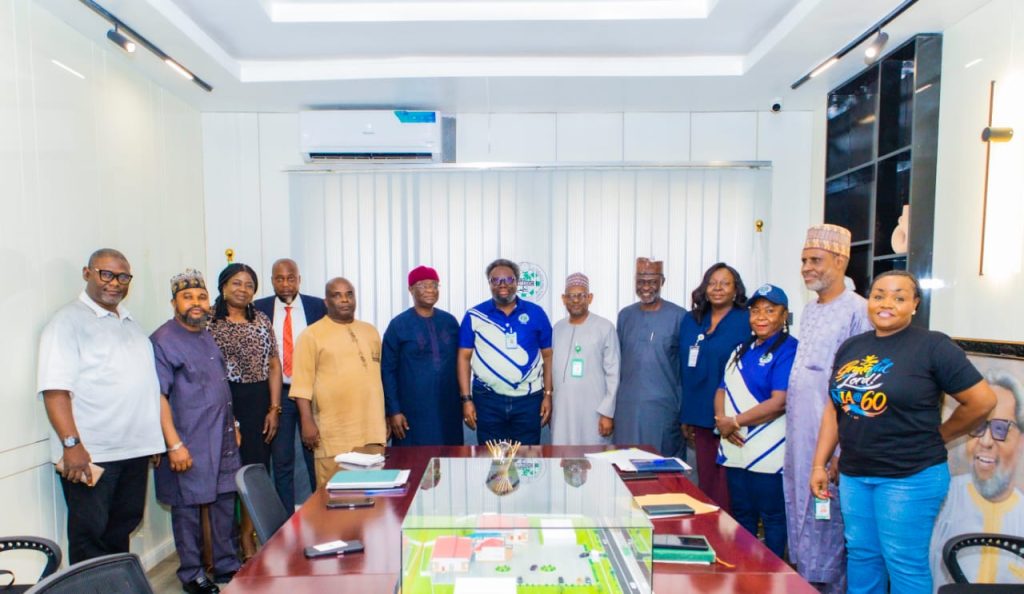
According to him, IPIMD is committed to supporting RMRDC through joint initiatives, including industrial and entrepreneurship capacity building programmes, policy review and think-tank support, and the co-organization of industrial summits, conferences, and trade missions.
The Institute also proposed collaboration in empowering entrepreneurs through cooperative structures such as the Entrepreneurs Multipurpose Cooperative Society (EMCOOP), as well as co-publishing the Industrial Analyst Magazine to enhance policy communication and industry visibility.
Providing background on the Institute, Achibiri noted that IPIMD, established in 2010 and inaugurated in 2014 with support from the United Nations Industrial Development Organization (UNIDO) and the Federal Ministry of Industry, Trade and Investment, has played a key role in training industrial managers, certifying professionals, and promoting research-driven policy advocacy.

He revealed that the Institute has already trained personnel from various Ministries, Departments, and Agencies (MDAs), including staff of RMRDC, and has contributed to building a pool of skilled industrial managers and entrepreneurs in Nigeria.
Despite these efforts, Achibiri highlighted several challenges facing Nigeria’s industrial sector, including weak managerial capacity among Micro, Small, and Medium Enterprises (MSMEs), low productivity, inadequate research-to-policy linkage, and limited collaboration between the public and private sectors.
To address these gaps, he positioned IPIMD as a technical partner capable of providing industrial skills development, policy support, and a platform for stakeholder engagement through its Industrial Policy Council and Industrial Research Council.
Professor Nnannyelugo Ike-Muonso in his response assured the team from the IPIMD that the RMRDC will partner with the organisation to formalize a strategic collaboration framework which will include the Institute’s membership in its Council’s ongoing database, and partner on key initiatives such as industrial publications, entrepreneurship development programmes, offering certified courses through the Council’s training school and develop a Geological Intelligence process to certify the nation’s raw materials. He also commended the leadership of the IPIMD for stating that the institute would work closely with the RMRDC to transform the nation’s industrial landscape and expressed optimism that deeper collaboration between both organizations would accelerate Nigeria’s journey toward industrial self-reliance.
The DG also commended the Institute’s readiness to support the RMRDC in advancing policies and programmes that will strengthen Nigeria’s industrial raw materials sector, enhance innovation, and promote sustainable economic development.