
By Moyofoluwa Ogunyemi and Mojeed Adeyemi
The Raw Materials Research and Development Council (RMRDC), the Manufacturers Association of Nigeria (MAN), and the Nigeria Customs Service (NCS) have jointly called on Nigerian manufacturers to embrace greater utilization of locally available raw materials as a key strategy for driving industrial growth, reducing import dependence and improving Nigeria’s economic competitiveness.

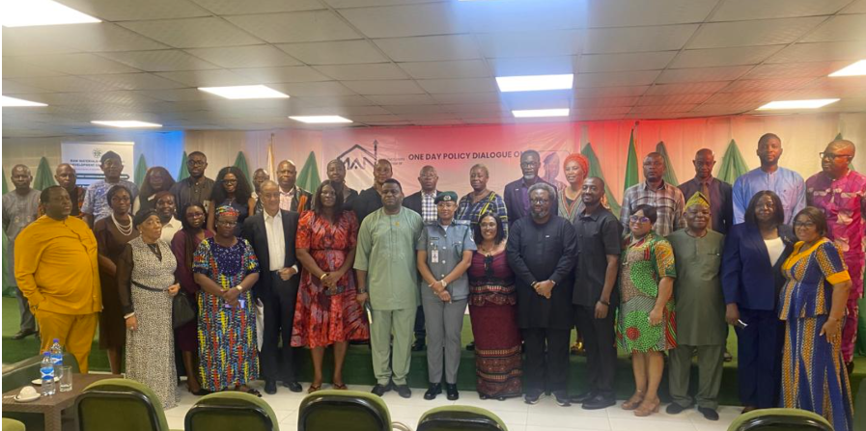
The call was made at a high-level policy dialogue on “Improving Local Raw Materials Utilization,” convened by MAN on Wednesday, 17th July 2026 at the MAN House, Ikeja, Lagos. The event brought together policymakers, manufacturers, regulators, and industry experts to discuss practical measures to advance value addition, strengthen domestic manufacturing, and optimise Nigeria’s abundant raw material endowments.


Speaking during the dialogue session, the Director-General/Chief Executive Officer of RMRDC, Prof. Nnanyelugo M. Ike-Muonso, who was the lead speaker, urged manufacturers to prioritize local sourcing of raw materials, embrace value addition and adopt backward integration strategies as a response to the challenges of foreign exchange volatility, rising production costs and global commodity price fluctuations. Delivering a presentation titled “Local Raw Material Sourcing Strategies and Managing Forex and Commodity Price Risk in Nigeria: Policy, Industry and Trade Perspective,” the RMRDC DG lamented that Nigeria’s manufacturing sector is increasingly constrained by heavy reliance on imported inputs, exchange rate instability and rising production costs.
He explained that recent foreign exchange liberalization and the depreciation of the naira have significantly increased the cost of imported raw materials, placing pressure on manufacturers and threatening industrial sustainability. He emphasized that a deliberate shift toward local raw material utilization is critical to building a more resilient, competitive, and self-sustaining industrial base. According to Ike-Muonso, about 70% of raw materials used by Nigerian manufacturers are imported, creating significant pressure on the nation’s foreign exchange reserves and limiting opportunities for domestic industrial growth. “As of 2025, we have 70% of raw materials all imported. I don’t know how we are going to compete in the global marketplace when 70% of our raw materials are imported”, he stated.
You Might AlsoLike




Prof. Ike-Muonso emphasized that local raw material sourcing is no longer merely a corporate social responsibility initiative but has become a strategic necessity for the survival and competitiveness of industries operating in Nigeria. He explained that increasing local value addition would not only conserve foreign exchange but also stimulate employment, deepen industrial linkages, strengthen domestic supply chains and promote sustainable economic development.
Highlighting the economic gains of backward integration, the RMRDC DG cited the cement industry as a compelling example of successful import substitution. He disclosed that local sourcing of key inputs such as limestone and gypsum has risen dramatically from total import dependence in the early 2000s to about 95 per cent local content today, generating estimated foreign exchange savings of over $2.5 billion for the country. “We have seen how that transition has happened from 100% foreign dependence in 2000 to about 95% local sourcing of limestone and gypsum between 2018 and 2026. Nigeria saves an estimated $2.5 billion that it would have ordinarily lost if that did not happen in the cement sector.”, he noted. He further noted that the transformation of the cement sector demonstrates the immense potential of local raw material development in enhancing industrial competitiveness, reducing import dependence and creating value within the domestic economy.
The Director-General also highlighted ongoing local substitution efforts in the beverage industry, where sorghum is increasingly replacing imported malted barley. He added that significant opportunities exist for expanding local sourcing and value addition in other sectors, including paints, plastics, agro-processing, chemicals and solid minerals, through the utilization of locally available raw materials such as kaolin, calcium carbonate, ethanol and palm oil derivatives.

Prof. Ike-Muonso emphasized that Nigeria possesses abundant raw materials capable of supporting industrial development but continues to lose substantial economic value through the export of unprocessed commodities. He pointed to commodities such as cocoa, cassava, sesame, cashew, lithium and iron ore as examples of resources with enormous potential for value addition and industrial processing. To unlock these potentials, he advocated greater investment in local processing facilities, beneficiation plants, agro-industrial clusters and technology-driven manufacturing hubs capable of transforming primary commodities into higher-value industrial products for both domestic and international markets.
The Director-General also emphasized the importance of supportive government policy catalysts in accelerating industrial transformation. He highlighted the proposed RMRDC 30% Value Addition Mandate, opportunities presented by the African Continental Free Trade Area (AfCFTA), ongoing infrastructure reforms and digital systems for raw material development as critical enablers of sustainable industrial growth.
Earlier in his welcome remarks, the Director General of MAN, Mr. Segun Ajayi-Kadir, MNI, represented by the Director of Research and Economic Policy, Dr. Segun Osidipe, described the dialogue as timely and critical, noting that manufacturers continue to grapple with overreliance on imported inputs, inadequate infrastructure, limited access to finance, and technology gaps. “Nigeria is endowed with abundant natural resources that form the backbone of industrial development globally. Yet, despite this bounty, our manufacturing sector grapples with challenges in accessing and processing these resources” He said. He noted that increasing local sourcing and embracing value addition would boost export, reduce the cost of production, reduce import dependency, increase GDP and strengthen Nigeria’s competitiveness within regional value chains under the African Continental Free Trade Area (AfCFTA).
Also speaking at the event, the Customs Area Controller (CAC), Apapa command, Comptroller Emmanuel Oshoba, represented by Assistant Controller of the Nigeria Customs Service, Mrs Oyekemi Lamai (NCS) reiterated the Federal Government’s commitment to promoting local manufacturing through trade policies and targeted incentives. She disclosed that the proposed Value Addition Bill by RMRDC would be supported by appropriate trade restrictions aimed at discouraging the export of unprocessed raw materials and encouraging domestic processing.
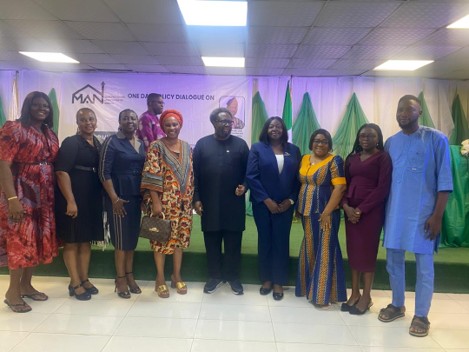
The RMRDC team was led by the Director-General/Chief Executive Officer, Prof. Nnanyelugo Ike-Muonso and comprised the Director Planning and Policy Development, Dr. (Mrs.) Tariere Giwa-Osagie; Deputy Director, Dr. Oluremi Elusoji; Lagos State Coordinator, Mrs. Uchechukwu Ojiakor; Assistant Directors: Mrs. Ebele Nwajuaku, Mrs. Stella Azi and Mrs Adaora Adibe; Principal Scientific Officer, Dr. (Mrs.) Moyofoluwa Ogunyemi and Scientific Officer I, Mr. Mojeed Adeyemi.