
By Abubakar Mikailu, Lukman Isah and Abdulmunin A. Sangari
Nigeria’s ambition to reclaim its position as a leading cotton-producing nation has received renewed momentum following a high-level stakeholders’ engagement aimed at reconnecting research, industry and government to transform the country’s cotton sector into a globally competitive industrial value chain.

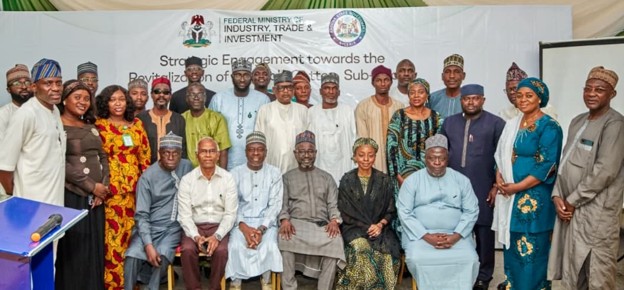
The two-day strategic engagement brought together policymakers, researchers, manufacturers, investors, financial institutions, development partners and farmers to develop a practical roadmap for revitalising one of Nigeria’s most strategic industrial raw materials.
Representing the Director General, Raw Materials Research and Development Council (RMRDC, Prof, Nnanyelugo Ike-Muonso, at the engagement were the Deputy Director, Cotton, Garment and Textile (CTG) Division, Dr Kike Oloruntoba, and the Kaduna State Coordinator, Mr Mutallab J. S and others.
The engagement focused on strengthening collaboration among research institutions, government agencies and industry players to unlock the enormous economic potential of Nigeria’s Cotton, Textile and Garment (CTG) value chain.
You Might AlsoLike


In his goodwill address, the Special Adviser to the Kaduna State Governor on Investments described cotton as a strategic commodity capable of accelerating Nigeria’s economic diversification and industrial development.
He identified the New Nigeria Development Company (NNDC) as a major stakeholder in Northern Nigeria’s cotton economy and called for increased investment in commercial cotton farming.
Drawing lessons from international experience, particularly China, he noted that improved BT cotton varieties could deliver significantly higher yields than Nigeria’s current production levels.

He therefore advocated the adoption of modern seed technologies, public-private partnerships (PPPs), the establishment of industrial clusters, supportive government policies and stronger participation by local and foreign investors.
Delivering the Council’s technical presentation titled “Strengthening Linkages Between Research, Industry and Government,” Dr Kike Oloruntoba reaffirmed that cotton remains one of Nigeria’s most important industrial raw materials.
She highlighted the achievements recorded under the RMRDC Cotton Booster Programme, noting that the initiative had significantly improved cotton productivity before its discontinuation, a development she linked to the subsequent decline in national cotton output.
According to her, RMRDC remains committed to its statutory mandate of bridging the gap between research and industry through the commercialisation of research findings, promotion of value addition and ensuring a sustainable supply of quality industrial raw materials for local manufacturing.
She stressed that Nigeria’s industrial future depends largely on stronger collaboration among scientists, manufacturers, policymakers and investors.
Presenting another technical paper, the Acting President of the Cotton Ginners Association of Nigeria, Alhaji Sani Dahiru, proposed several reforms to stimulate the growth and competitiveness of the cotton industry.
His recommendations included replacing polypropylene packaging with cotton sack bags through enforceable legislation, introducing a Guaranteed Minimum Price (GMP) for seed cotton to protect farmers and encourage increased production, as well as reducing export duties and providing incentives to promote domestic processing and export competitiveness.
During the interactive session, stakeholders outlined the complementary roles of institutions across the cotton value chain.
The Institute for Agricultural Research (IAR), Ahmadu Bello University, reaffirmed its responsibility for cotton breeding, genetic improvement, development of improved seed varieties and agricultural research.
RMRDC reiterated its leadership role in industrial raw materials development, research commercialisation and industrial collaboration, while the National Biotechnology Development Agency (NABDA) highlighted its ongoing work in biotechnology research, development of BT cotton technologies and capacity building for researchers and farmers.
The discussions reinforced the importance of stronger institutional cooperation in driving innovation, improving productivity and strengthening Nigeria’s competitiveness in the global cotton market.
Participants agreed that Nigeria’s Cotton, Textile and Garment value chain requires stronger integration to restore its competitiveness.
They noted that increased textile production would stimulate cotton farming, while expansion in garment manufacturing would create sustained demand for locally produced cotton.
Among the major challenges identified were declining cotton production, inadequate institutional coordination, poor commercialisation of research outcomes, weak private-sector investment and unreliable electricity supply.
The Cotton Ginners Association of Nigeria also observed that the dissolution of the former Cotton Board had created an institutional vacuum that weakened coordination across the industry. The association therefore called for stronger governance structures to provide effective direction for sector development.
Representatives of the Federal Ministry of Industry, Trade and Investment disclosed ongoing efforts to identify sustainable alternatives to polypropylene packaging.
The Bank of Agriculture, meanwhile, indicated its readiness to examine proposals on guaranteed pricing mechanisms that could support cotton farmers and strengthen production.
As the first day of the engagement concluded, participants expressed optimism that Nigeria possesses the expertise, institutional capacity and investment opportunities required to restore its cotton industry.
A strong consensus emerged that meaningful transformation would only be achieved through coordinated partnerships involving government, research institutions, manufacturers, financial institutions, investors and development partners.
Stakeholders emphasised that research innovations must move beyond laboratories into commercial production, where they can generate employment, increase industrial productivity, reduce import dependence and enhance Nigeria’s global competitiveness.
The Kaduna stakeholders’ engagement further demonstrated RMRDC’s strategic role in advancing industrial raw materials development and promoting research-driven industrialisation.
By strengthening partnerships among research institutions, government and industry, the Council is helping to lay the foundation for a modern, resilient and globally competitive cotton industry.
With sustained policy support, stronger institutional collaboration, increased private-sector investment and effective commercialisation of research outcomes, Nigeria is well positioned to transform its cotton sector into a major engine of industrial growth, export expansion, wealth creation and sustainable economic development.