
By Jimohoyesigi Barakah & Yakub Raheemat
The Raw Materials Research and Development Council (RMRDC) has reaffirmed its commitment to the sustainable development of Nigeria’s shea industry, advocating increased investment in shea conservation and the establishment of plantations to safeguard the country’s valuable shea resources.

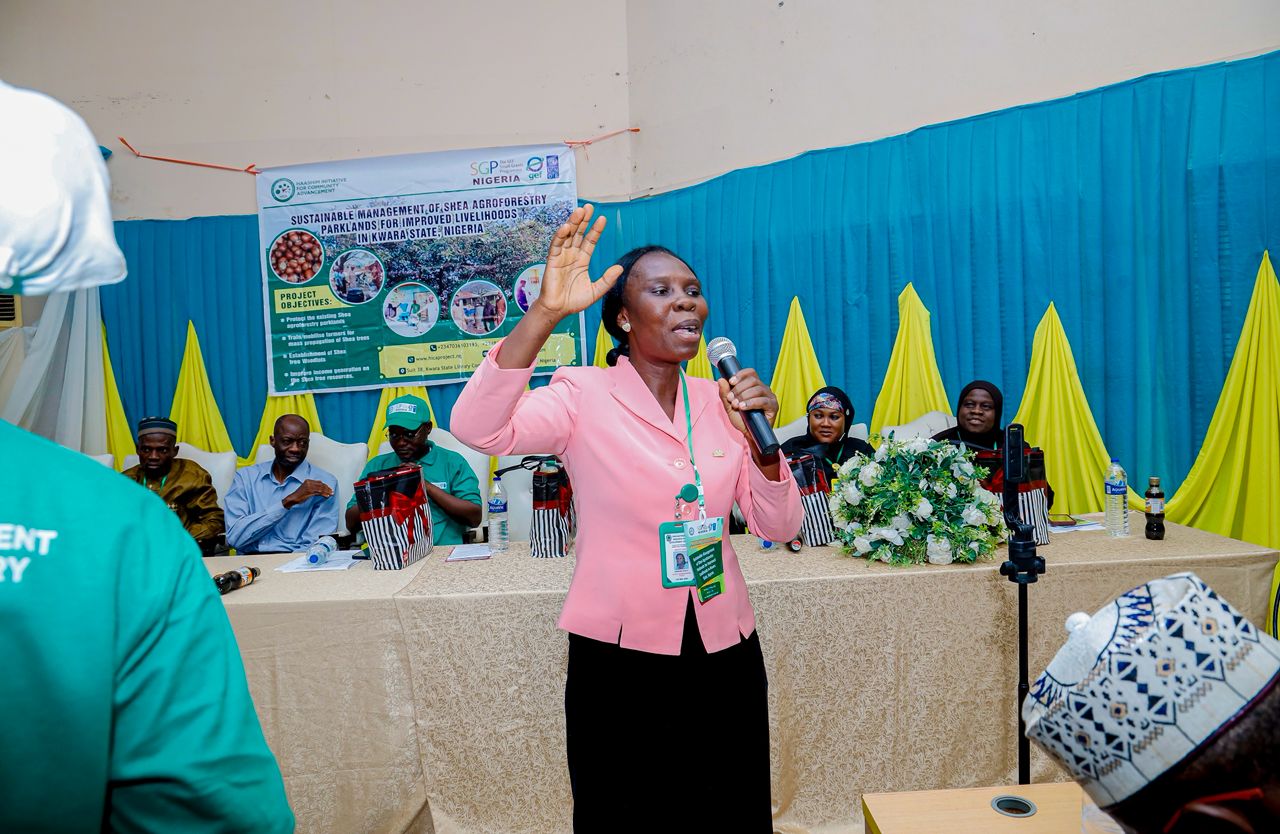
The Kwara State Coordinator of RMRDC, Mrs. Adewumi L. O., stated this during a Policy Dialogue and Learning Workshop organised by the United Nations Development Programme-Global Environment Facility (UNDP-GEF) in collaboration with Hasshim Initiative Community Advancement (HICA) in Ilorin on Tuesday, 23rd June 2026.
Speaking during the event and at a breakout session, Adewumi said the Council had continued to spearhead crop development and raw materials enhancement programmes across the country through the provision of hybrid seeds, farm machinery and post-harvest technologies to rural farmers.
According to her, the Council also collaborates with relevant agencies to promote local sourcing of raw materials and reduce Nigeria’s dependence on imports.
You Might AlsoLike



She stressed the need to domesticate shea through the establishment of plantations and called for an end to the indiscriminate felling of shea and other economic trees, noting that such practices threaten the sustainability of the industry.
Adewumi commended the efforts of UNDP-GEF and expressed RMRDC’s readiness to partner with the Kwara State Government and other organisations, both within and outside Nigeria, to promote the sustainable management and development of shea resources.
The workshop attracted government officials, researchers, development partners, community leaders, farmers, women shea processors and civil society organisations. It featured technical presentations on the status of shea tree populations and their implications for livelihoods, as well as analyses of the shea value chain from production to market.

Participants at the workshop raised concerns over the rapid degradation of shea agroforestry parklands in Kwara State, attributing the trend to illegal charcoal production, indiscriminate tree felling, climate change, poor regeneration of shea trees and expanding agricultural activities.
They warned that the continued depletion of shea resources poses serious threats to the environment and the livelihoods of thousands of rural households that depend on the shea value chain for income and sustenance.
Stakeholders urged the government at all levels to strengthen collaboration with relevant organisations to promote sustainable land-use practices, improve policies on shea conservation, increase women’s participation in the shea value chain and enhance rural incomes.
Development partners and technical experts also called for increased farmer training, improved planting and propagation techniques and the integration of shea into climate-smart agroforestry systems.
The workshop ended with a call for collective action to safeguard shea resources, with participants stressing that sustainable management of shea agroforestry parklands is critical to environmental protection, economic growth and improved livelihoods in Kwara State and beyond.